Home / Bulk liquid

Bulk liquid logistics

Liquids don’t ship like boxes.

Moving a liquid internationally means matching the product to the right equipment, the right mode and the right handling at both ends. That’s the part of logistics I’ve chosen to specialize in.

Equipment

Three ways to carry a liquid, each with trade-offs.

There’s rarely one right answer. Volume, product classification, temperature needs, cleanliness requirements and the receiving site’s setup all push the decision one way or another.

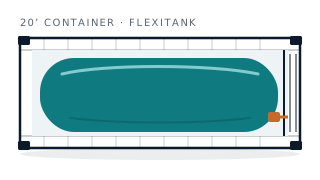
Illustration of a flexitank inside a 20-foot container

Flexitanks

A large, single-use bladder installed inside a standard 20’ dry container. It turns ordinary container capacity into bulk liquid capacity.

Typical
Up to ~24,000 L per 20’ container
Good for
Non-hazardous liquids moving in volume: oils, food-grade liquids, many industrial products
Watch for
Generally not for hazardous cargo; container prep, loading and unloading need planning
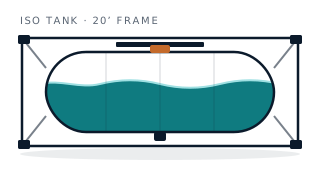
Illustration of an ISO tank in its frame

ISO tanks

A reusable steel tank held in a container-sized frame. It is built for repeated use and for a wider range of products, including many regulated ones.

Typical
Roughly 17,500–26,000 L, depending on the tank
Good for
Chemicals, food-grade liquids in dedicated tanks, products that need heating
Watch for
Cleaning and prior-cargo history, tank availability and getting the empty tank back
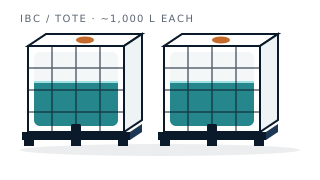
Illustration of two IBC totes on pallets

IBCs & totes

Caged plastic containers on a pallet base. They’re flexible, stackable and easy to handle at sites without bulk unloading equipment.

Typical
About 1,000 L per unit, loaded into containers or trucks
Good for
Smaller volumes, mixed orders, product going straight into a customer’s process
Watch for
Correct UN rating for regulated products, stacking limits, one-way vs. returnable

Capacities are typical industry ranges and vary by equipment provider, product density and regulations. Every move is confirmed case by case.

Multimodal

Ocean, air and everything that connects them.

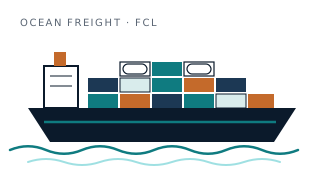
Illustration of a container vessel

Ocean freight

Where most international bulk liquid volume moves. It means full containers with a flexitank, an ISO tank, or a load of IBCs. The work is in lining up the carrier, the origin and destination handling, and the documents so the container doesn’t sit at the port.

Illustration of a cargo aircraft

Air freight

For when time matters more than cost: samples, urgent replenishment, high-value specialty liquids. Packaging and dangerous goods rules shape what can fly and how.

The coordination behind a quote

One shipment, a lot of people.

A bulk liquid move that works touches pricing, operations, carriers, overseas offices and logistics partners. A big part of my job is getting them aligned before the customer ever sees a number, so the quote holds up when the product actually moves.

Commodities

What I work around, and what each one asks of you.

01

Chemicals

Classification drives everything: which equipment is allowed, how it’s labeled and documented, and which carriers will take it. The safety data sheet is the starting point.

02

Food-grade products

Cleanliness and traceability come first. That means suitable equipment, cleaning documentation, and whatever certificates the receiver requires.

03

Oils

High volume and often a good fit for flexitanks. Viscosity and temperature can affect how the product loads and discharges.

04

Fats

Many solidify at ambient temperatures, so heating capability and discharge planning at destination matter as much as the ocean leg.

05

Specialty products

Smaller volumes, specific handling instructions, and customers who need to know exactly where their product is.

06

Personal care

Ingredients and finished liquids where packaging, product integrity and consistent timing protect the customer’s own production schedule.

Working with me

What I need to quote a bulk liquid move.

If you have these handy, the first conversation goes a lot faster. If you don’t, that’s fine too. Working them out together is part of the job.

  1. Product & safety data sheet

    Name, grade, and the SDS so classification is clear from the start.

  2. Volumes

    Per shipment, and how often. One-off and recurring moves are priced differently.

  3. Origin, destination & terms

    Pickup and delivery points, plus who is responsible for what under the Incoterms.

  4. Equipment preference

    Flexitank, ISO tank or IBCs, or let’s figure it out based on the product and the receiver.

  5. Temperature & handling

    Heating, cleanliness or certificate requirements, and how the destination unloads.

  6. Timing

    When the product is ready and when it needs to arrive.